
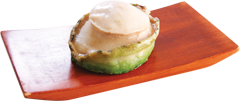
 Brief Introduction:
Australia is abundant with wild abalones, and green lip abalone is the most precious species because of its limited production. The water in south of Australia is clear, cold, and rich in nutrients. It is the best growing environment for wild green lip abalones. Green lip abalones are the species of premium abalone which are famous for their tender meat and aromatic flavor.
Place of origin:
Southern waters of Australia
Characteristics:
According to modern medicine, abalones are rich in various nutrients such as protein, fat, iodine, calcium, phosphorus, and vitamin A. Therefore, abalones have tonifying and strengthening effects.
Efficacy:
Abalones have various dietotherapy properties such as being yin-enriching, blood pressure balancing, tonifying, and beautifying. According to TCM (Traditional Chinese Medicine) theories, abalones have yin-enriching, heat-clearing, liver-nourishing, and vision-improvement properties.
Suggested Storage Method:
Store in the freezer compartment of a refrigerator at -18°C.
Suggested Consumption Method:
Frozen green lip abalones are fresh and pleasant. It can be used for making stew or soup, sliced hot pot or fried or boiled in whole piece.
Defrosting method:
Store the frozen abalones at a temperature between 2 °C to 6 °C for about 24 hours to 48 hours. Cook them only after they are completely defrosted. It is not recommended to defrost frozen abalones rapidly. Do not wash them under a water faucet or defrost them at room temperature because that may damage the abalone meat fiber. Cut and remove the tips from the mouths of the defrosted abalones and clean the abalones with a brush. Blanch the abalones with ginger and scallion to remove their oder. When blanching the abalones, remember to put them in the water while it is still cold in order to prevent the abalones from cracking or the lips from falling, which may have an adverse impact on their appearance. The blanched abalones can then be stewed, cooked, or used as an ingredient of soup.
 Brief Introduction:
 Brief Introduction:
 Brief Introduction:
 Brief Introduction:
 Brief Introduction:
 Brief Introduction: